


















You’ve built up your pull-ups, your dips are feeling strong, and you’ve been practising for weeks, maybe months. But every time you attempt a muscle-up, you either can’t pull yourself high enough or you reach the bar and just get... stuck, scared, or both.
Sound familiar?
The muscle-up can be a frustrating skill to learn because strength is only one piece of the puzzle. You need explosive power to get high enough, the timing and technique to get you over the bar, and the confidence to put it all into one seamless movement.
But with a few technique adjustments, targeted exercises, and the right progressions, you work out exactly what was holding you back.
This isn’t an easy movement to master by any stretch. It’s one of the biggest milestones in functional fitness and calisthenics training, but with consistent practice, you can build the strength and confidence needed to get your first rep.
In this guide, we'll explain how to do a muscle up, break down the different variations, and share the best progressions to help you master the movement.
What Is A Muscle Up?
A muscle up is an advanced calisthenics movement, commonly seen in CrossFit and hybrid fitness workouts, that combines an explosive pull-up and a dip into one continuous movement.
Rather than stopping with your chin above the bar like you would during a traditional pull up, you pull yourself high enough to transition your chest over the bar before pressing yourself into a fully locked-out support position (straight arms at the top of the bar).
By combining a pull and a press, muscle-ups challenge your upper-body strength, explosive power, coordination, and body control all in one move. There are several ways to perform a muscle-up depending on your goals and training style:
Bar muscle-up: Performed on a fixed pull-up bar. This is the variation most beginners learn first and is common in CrossFit workouts.
Strict muscle up: An advanced variation performed without momentum (no kipping), relying entirely on upper-body strength and technique. This variation is most commonly trained by those doing calisthenics.
Kipping muscle up: Uses momentum generated the hips and shoulders in a swinging motion to help lift the body over the bar or rings. This is the version most commonly seen in CrossFit competitions.
Ring muscle up: Performed on gymnastics rings, which move independently and force your upper body to work harder to stabilise and control them throughout the movement. Research has shown the ring muscle up produces greater activation of muscles including the upper trapezius, biceps, forearm flexors and triceps compared to the bar muscle up, due to the additional stability demands and use of a false grip, making it a more demanding variation for upper-body stability and strength [1].
If you're learning how to muscle up for the first time, starting with the bar muscle up progression is often the most accessible route before progressing to something more challenging like ring muscle ups.
How To Do A Muscle Up
Although it looks like one smooth movement, a muscle up can be broken down into three distinct phases: the pull, the transition, and the press.
Understanding each phase makes it much easier to identify where you might be getting stuck and which exercises you should focus on during your training.
1. Starting Position
Start by standing slightly behind the pull-up bar. Jump up and grip the bar with your hands just outside shoulder-width apart, wrapping your thumbs around the bar. Your body should be hanging with your arms straight and your body in a hollow hold position.
Keep your core braced and let your legs hang loosely beneath you. If you’re performing a kipping muscle-up, getting the hang right can also help you generate the momentum you’ll use for the next phase.
2. Explosive Pull
Next comes the pull, which might feel familiar if you’re used to doing pull-ups, but there's one important difference – you need to get much higher.
Engage your shoulders and pull explosively, driving your elbows down and back.
Instead of thinking about pulling your chin to the bar, aim to pull your lower chest or upper stomach towards it.
The higher you can pull, the easier the transition will be. Avoid swinging your legs unless you're intentionally performing a kipping muscle-up.
3. Transition Phase
The transition is where most people struggle. As your chest reaches the bar, lean your torso forwards and quickly bring your shoulders over it, allowing your wrists and elbows to rotate into position.
Rather than pulling straight upwards, think about pulling yourself around the bar. This movement shifts your body from below the bar into the top of a dip position.
Speed matters a lot here because trying to muscle through this phase too slowly often results in getting stuck with your chest at bar height. The transition needs to be swift, or else it’s not happening.
4. Dip & Lockout
Once your shoulders and chest are over the bar, you’re through the hardest part. Now, keeping your chest tall, lock out your arms and maintain control before lowering back to the starting position.
5. Repeat
Got one? If you’re going for another rep, don’t lose all that lovely momentum.
Don’t go floppy on your way down. Keep your core engaged and lower with control to preserve good technique and minimise unnecessary strain on your shoulders.
As you move underneath the bar, allow your body to naturally swing forwards into the next rep rather than dropping straight down as if you were going to land on your feet.
For a kipping muscle-up, move into your arch position as you descend before driving back into a hollow position to generate momentum for the next explosive pull.
If you're practising strict muscle-ups, forget the swing and lower yourself under control back into a dead hang before starting your next rep.
Muscle Up Progressions: Exercises To Help You Get Your First Bar Or Ring Muscle Up
Before starting these muscle up progressions, you should already have a solid foundation of pushing and pulling strength. As a general guide, you should be comfortable performing about 8-10 strict pull-ups and 5-10 strict dips with good form before moving on to these progressions.
Still working towards those numbers? Start with our guide to getting your first pull-up before coming back to muscle-up training.
Like any advanced skill, your first muscle-up is built through progressive training, and although it can be tempting to attempt full reps every session, it's important to focus on exercises that strengthen each phase of the movement. As your pulling power, pressing strength, and coordination improve, putting them together becomes much more achievable.
Chest-To-Bar Pull-Ups
One of the biggest differences between a pull-up and a muscle-up is how high you need to pull.
Instead of aiming to get your chin over the bar, think about pulling the bar towards your lower chest or upper stomach. Chest-to-bar pull-ups teach you to pull higher and more explosively, helping develop the power you'll need to get your torso high enough to transition over the bar.
How to do chest-to-bar pull-ups:
Start in a dead hang: Hold the bar with an overhand grip slightly wider than shoulder-width apart. Fully extend your arms and allow your shoulders to relax upwards towards your ears so you're starting from the bottom of the movement.
Engage your shoulders: Before bending your elbows, pull your shoulder blades down and slightly back. Think about creating space between your shoulders and ears. Your body should rise slightly without your elbows bending.
Brace your body: Tighten your core and glutes to create a strong, stable position. Avoid letting your legs swing around underneath you.
Pull explosively: Drive your elbows down and back towards your hips as you pull your body upwards. Rather than thinking about getting your chin over the bar, aim to bring your lower chest towards it.
Lower with control: Extend your elbows and slowly return to a full dead hang before starting your next rep.
Can't get your chest there yet? Keep practising explosive pull-ups where you simply aim to pull as high as possible each rep.
Dips
Strong dips are just as important as strong pull-ups. In your muscle-up, once you've transitioned over the bar, you still need enough pressing strength to lock out the movement and complete the rep.
Dips build the pushing strength in your chest, shoulders, and triceps needed to press yourself from the transition into the locked-out position at the top of a muscle-up.
How to do dips:
Grip the bars: Hold on to a parallel bar and jump or press yourself up until your arms are straight. Keep your chest lifted, brace your core, and bend your knees loosely behind you.
Set your shoulders: Pull your shoulder blades down and back, thinking about creating space between your shoulders and ears.
Lower your body: Bend your elbows and lower yourself slowly between the bars. Keep your elbows pointing back rather than letting them flare too far out to the sides.
Watch your depth: Lower until your elbows reach roughly a 90-degree angle and your upper arms are roughly parallel with the floor. Only go as low as you can comfortably control.
Push back up: Press firmly through your hands to straighten your arms and return to the starting position.
Can't perform strict bodyweight dips yet? Start with assisted or banded dips and build your strength gradually. If you're training for a ring muscle-up, progressing to ring dips will also help prepare you for the additional stability and control demands of the rings.
Negative Muscle Ups
Stuck at the top? This progression is one of the fastest ways to get unstuck and build that end-of-rep confidence.
Negative muscle-ups let you practise this tricky section in reverse, helping you understand where your body, elbows, and chest need to move without having to generate enough power to get there from a dead hang.
How to do negative muscle-ups:
Start above the bar: Use a box or step to get into the finishing position of a muscle-up, with your arms straight, shoulders stable, and the bar around hip height.
Lower into the dip: Bend your elbows and slowly lower your chest towards the bar, keeping your body close to it.
Reverse the transition: As your chest reaches the bar, begin moving your shoulders backwards while allowing your elbows and wrists to rotate underneath it.
Control the pull: Once your chest has moved behind the bar, continue resisting gravity as you lower through the pull-up portion.
Finish in a dead hang: Slowly extend your arms until you're back in the starting hanging position.
Aim to make the entire descent slow and controlled, particularly through the transition. Around three to five seconds is a good place to start.
Jumping Muscle Ups
Jumping muscle-ups take some of your bodyweight out of the equation so you can concentrate on learning the path your body needs to travel. They're particularly useful for practising the transition and building confidence in getting your chest over the bar.
How to do jumping muscle-ups:
Set up your bar: Use a bar low enough that you can reach it with your feet firmly on the floor, or position a stable box underneath a higher bar.
Take your grip: Hold the bar slightly wider than shoulder-width apart and bend your knees slightly, ready to use your legs.
Jump and pull: Push through your feet while simultaneously pulling down on the bar. Your legs should provide just enough assistance to help you gain height.
Move around the bar: As your chest approaches the bar, lean forwards and bring your shoulders over it. Think about travelling up and around rather than straight upwards.
Press to lockout: Once you're above the bar, push down until your arms are fully extended.
As the movement becomes easier, use progressively less force from your legs. The goal isn't to see how high you can jump; it's to gradually make your upper body do more of the work.
Band-Assisted Muscle Ups
Resistance bands are a useful tool for bridging the gap between muscle-up progressions and your first unassisted rep. Unlike drills that isolate one phase, a band lets you practise the entire movement while reducing the amount of bodyweight you have to lift.
How to do band-assisted muscle-ups:
Set up the band: Secure a resistance band around the pull-up bar and place one foot inside it. Start with a thicker band if you need more assistance.
Start in your hang: Grip the bar slightly wider than shoulder-width apart, straighten your arms and brace your core. Keep tension through your body rather than letting the band move you around.
Pull explosively: Engage your shoulders before driving your elbows down and back. Pull your chest towards the bar as the band helps you generate height.
Transition over the bar: As you reach the top of the pull, bring your chest forwards and over the bar, rotating your wrists and elbows into the bottom of your dip.
Press and lock out: Push down into the bar until your arms are fully extended.
Lower with control: Reverse the movement rather than simply allowing the band to pull you back down.
As you become stronger, gradually reduce the amount of assistance by using thinner bands until you can perform the movement unassisted. Focus on performing smooth, controlled repetitions with good technique - when you're there, you can progress to lighter bands.
How Do Muscle Up Variations Compare?
Strict Vs Kipping Muscle Up
A strict muscle-up relies entirely on upper-body strength, pulling power, and technique, and is something those training calisthenics will continuously aim toward for proper form and technique. Because no momentum (ie leg swings) is used during a strict pull-up, it requires a higher level of strength and body control.
Kippings, on the other hand, are muscle-ups that involve a leg swing to help build momentum and allow you to reach a muscle-up without relying solely on upper body strength. The momentum of a kip is generated by the hips and core to help carry your body over the bar - while it still demands strength and coordination, the kip reduces the amount of pulling force needed, allowing athletes to perform higher repetitions.
For beginners, learning strict pulling strength first can help build a solid foundation before introducing the kip. Once you can consistently perform strong pull-ups and controlled dips, practising the kipping technique by just swinging on the bar can help you develop the timing needed for your first muscle-up.
If your goal is simply to get your first rep, don't think of the strict and kipping muscle-up as competing skills. Blending both techniques might actually get you there faster.
Bar Vs Ring Muscle Up
The bar muscle-up and ring muscle-up follow the same basic movement pattern, but they feel very different in practice.
A bar muscle-up is performed on a fixed pull-up bar, meaning the movement is more predictable and generally easier to learn. Because the bar doesn't move, you can focus on generating enough height in your pull and mastering the transition over the top. This is where you want to start if you’re a beginner.
A ring muscle up, on the other hand, is performed on freely moving gymnastics rings, which makes the move more challenging. The rings can rotate and move independently, requiring much greater shoulder stability, coordination, and body control throughout every phase of the lift.
Research comparing the two found that the ring muscle up produces greater activation in muscles including the upper trapezius, biceps brachii, forearm flexors, and triceps, highlighting the additional stability demands of the movement [1].
If you’ve mastered the muscle up and are ready to move on to something more advanced, the bar variation is a great way to challenge your core strength and stability even more.
False Grip vs Regular Grip
When learning how to do a muscle-up, you’ll come across two main ways to hold the bar or rings: a false grip or a regular grip. Which one you use will largely depend on whether you're performing a bar or ring muscle-up.
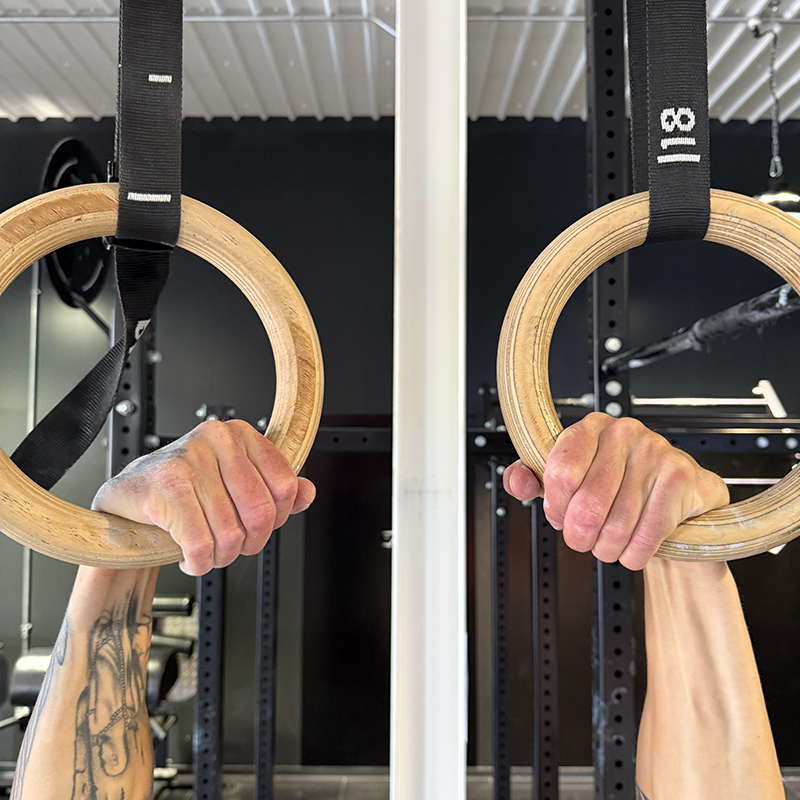
Regular Grip: Your palms wrap around the bar or rings as they would during a traditional pull-up, with your wrists sitting below the bar. This is most commonly used for bar muscle-ups, particularly when using a kip.
False Grip: Your wrists sit over the bar or rings, with the base of your palm resting on top. This shortens the distance your hands need to travel during the transition from the pull to the dip and is most commonly used for strict ring muscle-ups.
If you're learning a bar muscle up, you don't necessarily need to use a false grip. A bar muscle-up can be performed with either grip, while the false grip is much more important when working towards a strict ring muscle-up.
The downside of false grips? They can feel a bit strange and uncomfortable at first. It doesn’t exactly feel natural, and it places more pressure through the wrists and forearms, so many beginners find it difficult to hold for more than a few seconds.
The key is to be patient. Like any skill, grip strength improves with consistent practice, and exercises such as dead hangs, farmer's carries, and reverse curls can help strengthen your hands and forearms as you work towards holding the position for longer. What feels awkward initially often becomes much more comfortable over time.
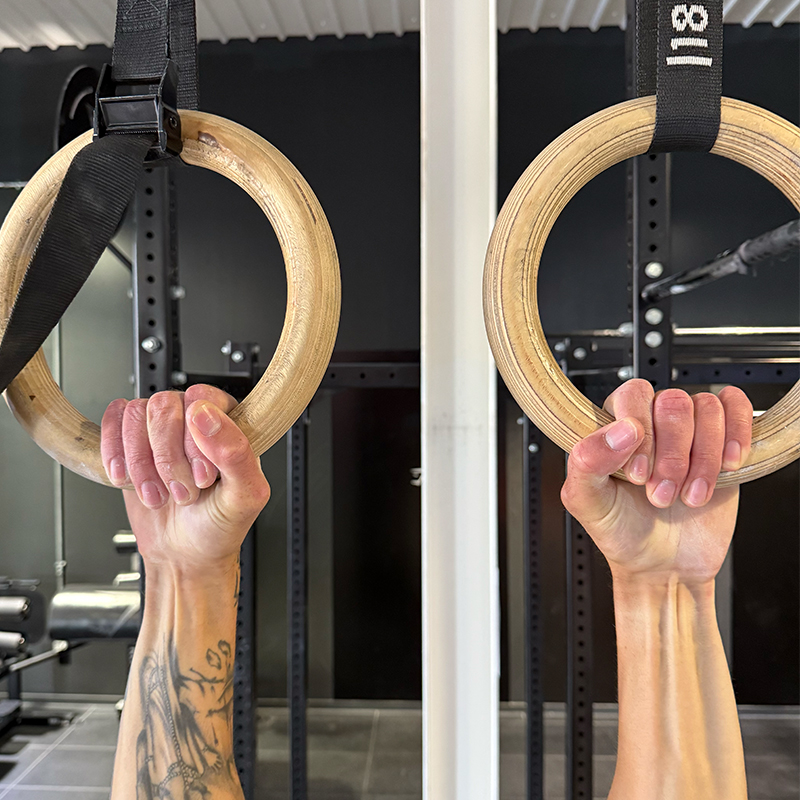
False grip
Regular grip
False grip
Regular grip
Muscle Up Technique Tips From Calisthenic Trainer, Zach Watson
Pull Around The Bar, Not Straight Up
One of the biggest mistakes beginners make is trying to move straight up and beyond the bar, essentially attempting an extremely high pull-up.
Instead, think about pulling your body around the bar. As your chest reaches bar height, drive your elbows behind you and lean your torso forward to make the transition smoother
Stay Tight Through Your Core
Keeping your core braced makes the move more efficient. A floppy body leaks power (and energy). Whether you're performing a strict or kipping muscle-up, keep your core braced and maintain tension through your legs to transfer force more efficiently.
Generate Power From Your Hips
If you're learning the kipping muscle-up, the movement starts long before the arms pull. Create a controlled hollow-to-arch swing and drive your hips forward explosively to generate upward momentum before initiating the pull.
Try not to bend your knees too much, and be patient with your hip drive timing. You want to initiate this when you're still a fair bit behind the bar. Generate the power from your hips, not your arms or you might end up with the dreaded chicken wing.
Finish Strong
Once you’ve thrown yourself over the bar (as quick as possible) stay strong and you've press until your elbows are fully locked out. You’ve completed the rep! From this gives finishing position, you’re prepared for controlled repetitions.
Avoid The "Chicken Wing"
If one arm climbs over the bar before the other, you've "chicken-winged" the rep. You can still pull yourself over from this position, but transitioning from an uneven press places extra stress on your shoulders and increases injury risk.
Instead of forcing the movement, keep building pulling strength and practicing transition drills until both arms move over the bar together. transition drills until you can move both arms over the bar together.
How To Warm Up For Bar Muscle Ups
Muscle-ups place significant demands on your shoulders, elbows, and wrists, so spending a few minutes warming up beforehand can help improve performance and reduce injury risk. Although injuries are relatively uncommon, studies have reported muscle-up-related injuries, including pectoralis major tendon ruptures, often occurring when athletes attempt explosive movements without adequate preparation or sufficient strength [2].
Before attempting muscle-up progressions, spend five to ten minutes preparing your upper body with dynamic mobility and activation exercises. A simple warm-up could include:
Band pull-aparts: To activate the upper back and rear shoulders.
Scapular pull-ups: Will improve shoulder control and engagement while reinforcing proper pulling mechanics.
Wrist mobility drills: Perform wrist circles, palm-down stretches, and palm-up stretches to prepare the wrists for gripping and transitions.
PVC pass-throughs: Increase shoulder mobility and open the chest.
Dead hangs: Build grip endurance while gently preparing the shoulders for loading.
If you regularly experience discomfort while training, consider using lifting grips or wrist wraps during pulling exercises to improve comfort and grip, although they shouldn't replace developing grip strength naturally.
FAQs
What do muscle ups work?
Muscle-ups are a full upper-body exercise that primarily targets the latissimus dorsi (lats), biceps, chest, shoulders, triceps, and forearms, while your core and glutes work to stabilise your body throughout the movement. Because they combine a pull-up and a dip, they develop both pulling and pushing strength in one exercise.
How long does it take to learn a muscle up?
It depends on your current strength and training experience. If you can already perform multiple strict pull-ups and dips, you might achieve your first muscle-up within a few weeks or months of focused practice. If you're building those movements from scratch, achieving your first muscle-up might take several months of consistent training.
Progress isn’t always linear, so focus on improving the individual components rather than rushing to complete the full movement, and most importantly - don’t give up.
How strong do I need to be to learn a muscle-up?
There's no magic strength requirement but having a solid foundation will make learning the movement significantly easier.
As a general benchmark, many coaches recommend being able to perform:
8 to 10 strict pull-ups with full range of motion.
5 to 10 strict straight-bar or parallel bar dips.
Several chest-to-bar pull-ups, showing you can pull explosively rather than simply getting your chin over the bar.
A 20 to 30-second hollow body hold, demonstrating enough core strength to maintain body tension throughout the movement.
If you can't hit these numbers yet, don't worry. It doesn't mean a muscle up is out of reach. It simply means your training should focus on building the strength and explosiveness that underpin the skill.
Remember, a muscle up isn't just a stronger pull-up. It combines pulling strength, pushing strength, coordination, and timing. That's why gym-goers who can do plenty of pull-ups may still struggle with the transition.
The progressions below will help you develop each piece of the puzzle, so you're ready to put them together into your first successful bar muscle-up or ring muscle-up.
My hand or wrist hurts when I use a false grip. What am I doing wrong?
Some discomfort is normal when first learning a false grip because it places pressure on areas of the wrist that aren't used to supporting your bodyweight.
If it feels uncomfortable, check your positioning. The heel of your hand should sit on top of the ring, with your wrist bent over it, rather than supporting your weight through your palm alone. Practising short false grip hangs and working on your wrist mobility can help you gradually build strength and tolerance in the position.
If it's your skin that's feeling the effects, rather than the joint itself, chalk can help improve your grip and reduce slipping, while gymnastics or leather hand grips can help protect your palms from friction and tearing during higher-volume training.
PSA: Do not use regular lifting straps for muscle ups as this is extremely dangerous. They are fixed and prevent you being able to bail or transition properly, which can put you at risk of injury.
Some pressure is one thing, but sharp or persistent pain isn't something to push through. Stop training and seek advice from a qualified healthcare professional if it continues.
How do I get over my fear of muscle ups?
Fear usually comes from feeling unstable during the transition over the bar. When you’re new to it, it can feel like you’re going to roly-poly over the bar, which can be scary.
Build your confidence up with jumping muscle-ups, band-assisted muscle ups and negative reps before attempting full repetitions. Lower bars, soft crash mats, and practising with a coach or training partner can also help you feel more confident.
Remember, confidence will come as your strength and technique improve, and the movement naturally starts to feel less intimidating.
How many times a week should I practise muscle up progressions?
For most people, two to three sessions per week is enough to make steady progress while allowing time for recovery. Accessory work can also be completed at the end of your usual training sessions, allowing you to incorporate training without the need to add extra sessions to your workout plan.
Focus on quality rather than quantity. Performing a handful of well-executed progressions will usually be more effective than repeatedly attempting full muscle ups with poor technique.
Final Thoughts
Learning how to do a muscle-up and getting your very first one is as much about patience as it is strength.
You don't need to chase full reps every session; the real trick to achieving the movement is focusing on being able to build the foundations first. Strong pull-ups, solid dips, and consistent muscle-up progressions will take you much further than repeatedly throwing yourself at the bar and wearing yourself down.
Remember that everyone progresses at a different pace. Some may achieve their first rep within a few months, while others take longer depending on their training experience and starting strength.
Stay consistent, prioritise quality over quantity, and celebrate the small wins along the way. Every stronger pull-up, smoother transition, and controlled negative brings you one step closer to your first successful muscle-up.
References:
[1] Walker CW, Bruenger AJ, Tucker WS, Lee HR. (2023). Comparison of Muscle Activity During a Ring Muscle Up and a Bar Muscle Up. International Journal of Exercise Science.
https://pmc.ncbi.nlm.nih.gov/articles/PMC10824315/
[2] Miears WH, Douthit C, Zumwalt M. (2020). Reconstruction of Subacute Pectoralis Major Tendon Rupture from CrossFit Injury: Case Report and Literature Review. Journal of Musculoskeletal Disorders and Treatment.
https://www.clinmedjournals.org/articles/jmdt/journal-of-musculoskeletal-disorders-and-treatment-jmdt-6-072.php